
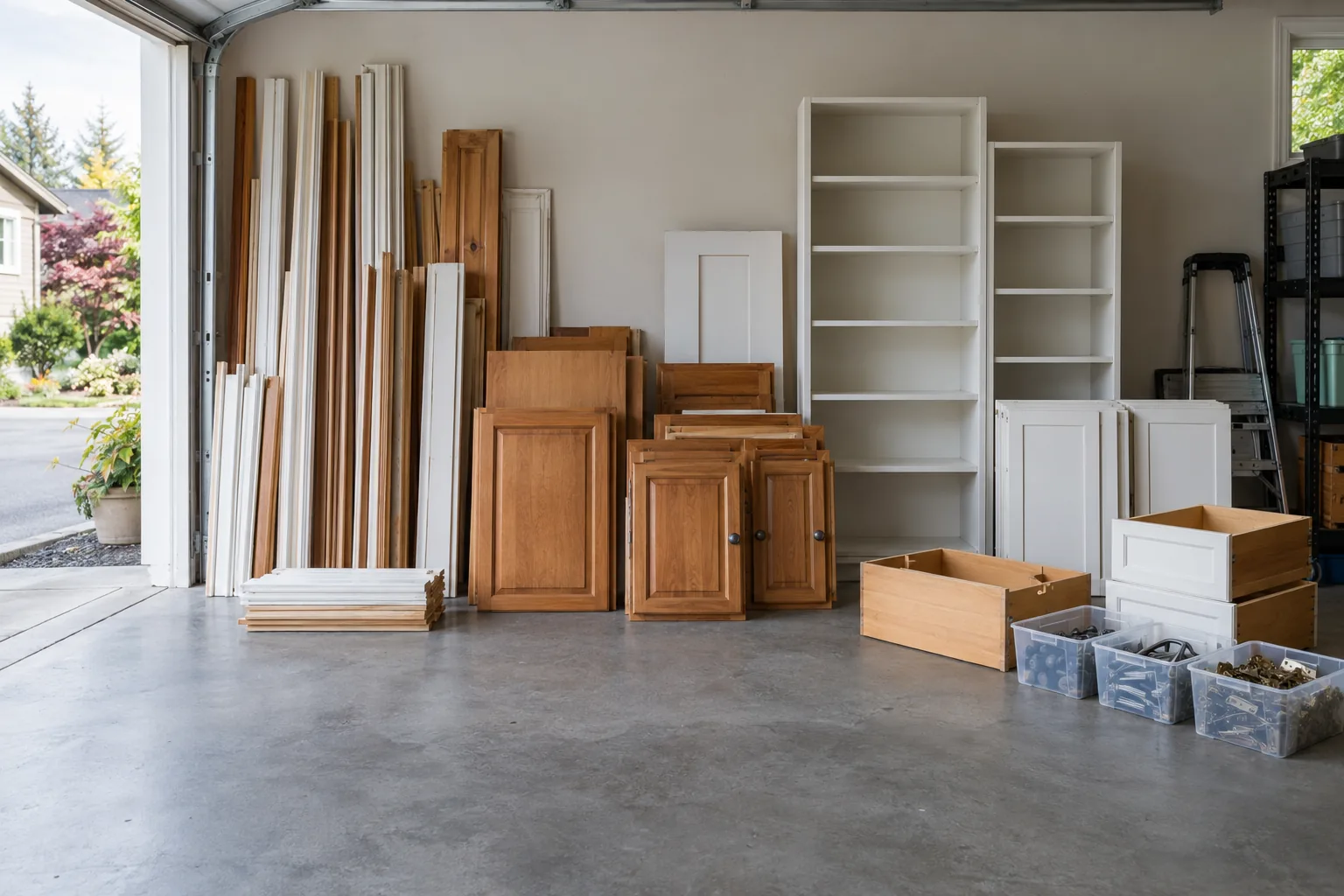
Start by marking three categories: items that stay, items you want removed intact, and materials that can be removed without a reuse requirement. That simple split gives the contractor a workable scope and prevents a valuable component from landing in the wrong pile.
Walk the project in removal order
Begin at the exit and work backward. Measure the narrowest doorway, note stairs and floor protection, and identify where removed material can be staged without blocking a walkway. Photograph the whole room, then take close views of fasteners, seams, utility connections, and damage.
Project checklist
| Check | What to record |
|---|---|
| Keep list | Every surface, fixture, and item that must remain untouched |
| Removal list | Material, quantity, condition, and whether intact removal matters |
| Access | Parking, stairs, elevators, door widths, and carrying distance |
| Utilities | Water, gas, and electrical connections that need qualified disconnection |
| Hazards | Age of finishes and any known or suspected regulated material |
Know where a careful removal stops
Selective deconstruction is not a substitute for structural engineering, asbestos testing, or licensed electrical and plumbing work. If the scope touches load-bearing elements, unknown materials, or live utilities, pause and bring in the appropriate specialist.
King County directs residents to its hazardous-waste resources for disposal guidance; check the current county instructions before handling an unknown product. Source: King County Hazardous Waste Management Program, retrieved September 24, 2026.
Questions to ask before accepting a quote
- Which items will be removed intact, and which cannot be promised?
- Who is responsible for utility disconnection?
- Where will material be staged and loaded?
- What changes if hidden damage or adhesives appear?
- Which materials are excluded from hauling?
Review SimpleLoad’s selective deconstruction scope, then send the project details and photos.