
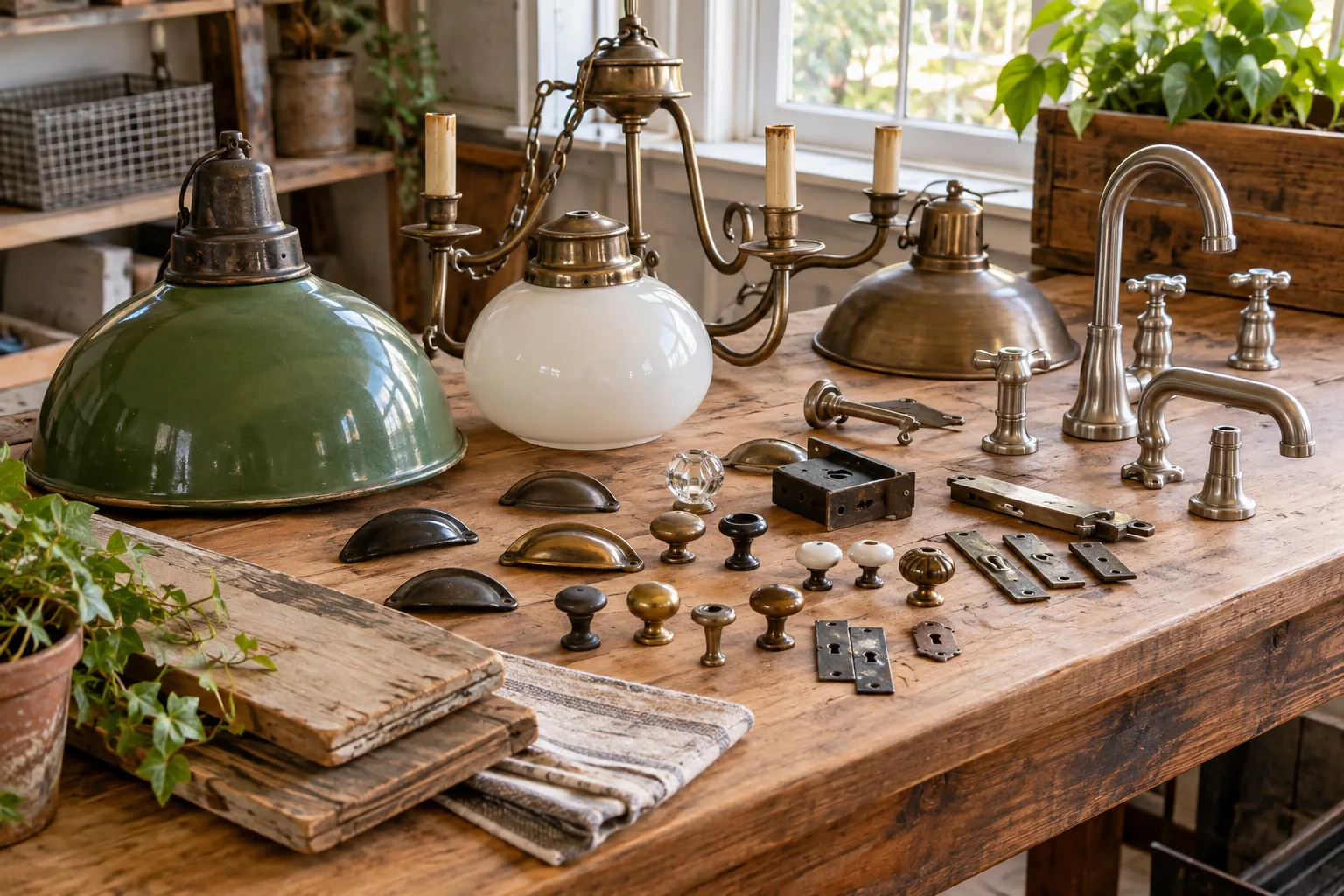
Save a fixture when it is complete, safe to remove, in usable condition, and already has a likely destination. A vintage light or solid door can be worth the extra handling; a corroded faucet with missing parts may only create another storage problem.
Use four tests
| Test | Question |
|---|---|
| Condition | Is it intact, cleanable, and free from obvious damage? |
| Completeness | Are mounting parts, keys, shades, and matching hardware present? |
| Removal | Can it be disconnected and removed without unsafe work? |
| Destination | Will you reuse it, sell it, or deliver it to an outlet that has confirmed acceptance? |
Good candidates to evaluate
Solid wood doors, quality cabinet pulls, distinctive lighting, mirrors, newer plumbing trim, shelving, and period hardware may deserve a closer look. Condition and current safety standards still matter. Electrical and plumbing fixtures should be disconnected by an appropriate qualified person when required.
Pack the small parts first
Use one container per fixture. Bag fasteners, photograph the assembled item, and note its room. Do not write directly on a finished surface. Keep glass shades and fragile trim separate from heavy hardware.
Read the cabinet reuse guide for kitchen-specific planning. Then review fixture removal scope or ask about your project.