
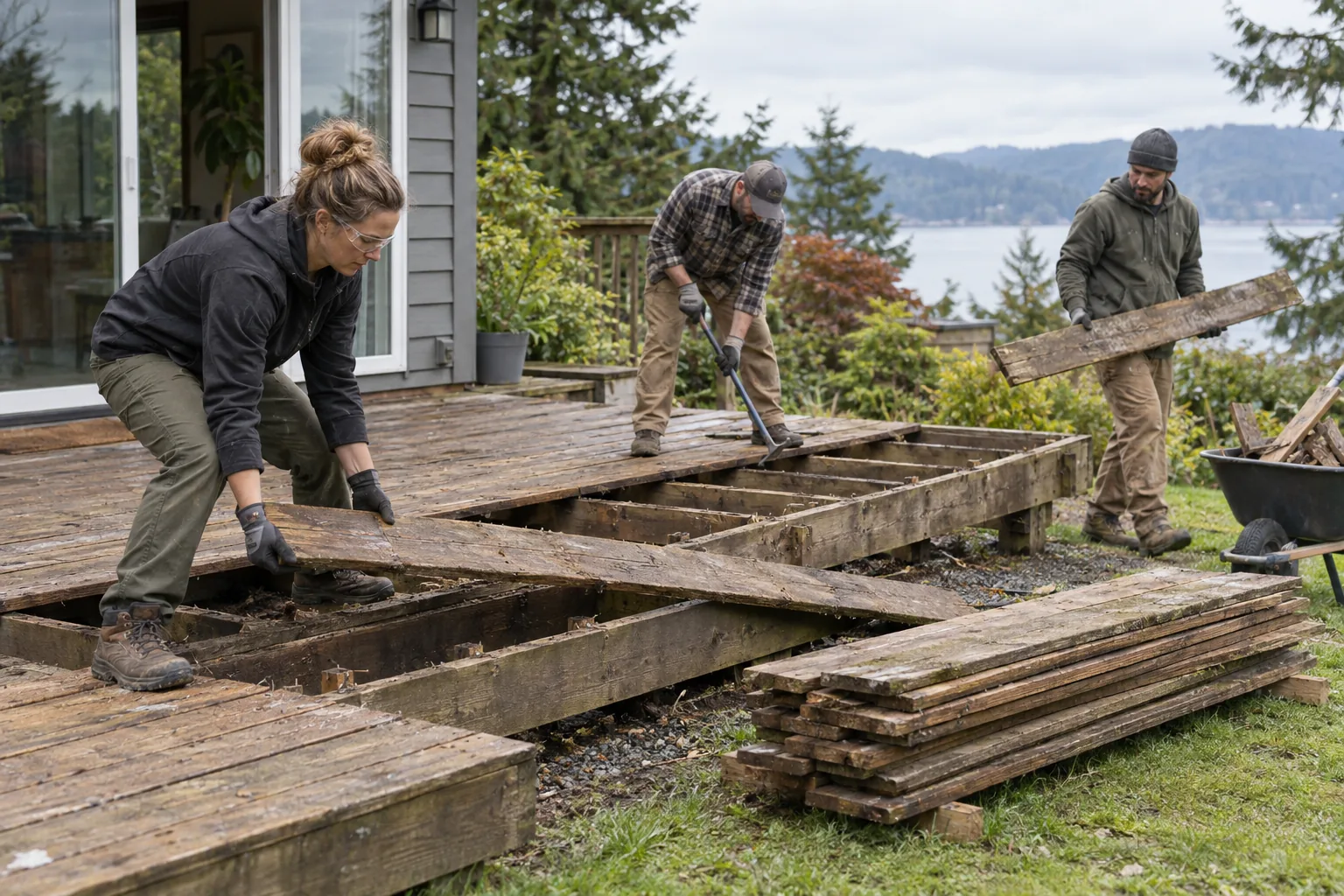
Choose deconstruction when boards or components have a realistic next use, the structure is stable enough to dismantle safely, and the schedule allows slower, piece-by-piece work. Conventional demolition may fit better when rot, coatings, embedded fasteners, or instability make salvage unsafe or impractical.
Decision table
| Factor | Deconstruction may fit | Demolition may fit |
|---|---|---|
| Material | Sound lumber with useful dimensions | Rotten, split, or heavily contaminated material |
| Structure | Stable enough for a planned sequence | Collapse risk or major hidden damage |
| Fasteners | Accessible screws or removable connectors | Dense nails, adhesives, or badly corroded hardware |
| Goal | Specific reuse plan | Clearance is the primary outcome |
| Schedule | Time for sorting and denailing | Tight construction deadline |
Inspect before anyone starts pulling boards
Look for soft framing, loose railings, concealed utilities, difficult slopes, and limited equipment access. Paint or coatings on older lumber may need assessment before disturbance. Do not climb on or dismantle a deck that may be unstable.
Ask these questions
- Which components are expected to remain usable?
- Who will remove protruding fasteners?
- Where will reusable boards be stacked?
- How will unusable material be handled?
- Does the project require a permit or separate structural work?
See deck and outdoor deconstruction, or share photos of the structure for a scope conversation.